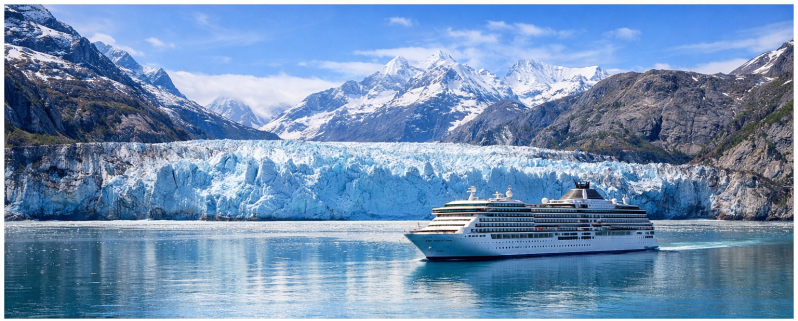
Alaska isn’t one of those “we’ll go someday” trips that quietly fades away. It’s the kind of travel that makes people come home and immediately start showing photos to anyone who will stand still long enough.
But Alaska also comes with a few real decisions up front—because “any ship, any week” isn’t the way to do this one. So let’s break it down the same way I do with clients: pick the right itinerary, pick the right cruise line for your style, decide cruise-only vs. cruisetour, pack smart, then choose a few shore excursions that are actually worth your time.
Step 1: Don’t pick the ship first—pick the Alaska experience
When people say “I want to cruise Alaska,” they usually mean one of two things:
-
Inside Passage + iconic ports + glacier viewing (easy, scenic, classic)
-
Inside Passage + Denali + the interior (bigger “Alaska” immersion)
The easiest “must-have” question is this:
Do you want Glacier Bay?
Glacier Bay is a big bucket-list day for many travelers, and access is limited. The National Park Service lists the cruise lines currently authorized to operate in Glacier Bay.
Step 2: Benefits of one cruise line over another (what actually matters in Alaska)
This is where I’ll be plain: Alaska is not the same on every cruise line, and it’s not just about who has the newest ship.
Here’s the practical way to choose:
Princess Cruises
Best for: first-timers, “I want the classic Alaska experience,” and travelers who care about the overall Alaska-focused feel onboard. Princess leans hard into Alaska as a destination and highlights Glacier Bay access on select sailings.
Holland America Line
Best for: travelers who want a calmer onboard vibe, strong enrichment, and a more traditional cruising style. Holland America also publishes a month-by-month Alaska guide that lines up with what I see clients enjoy most (daylight, wildlife, salmon runs, etc.).
Norwegian Cruise Line (NCL)
Best for: “I want flexibility.” More casual style, less formal structure. NCL is also listed among cruise lines authorized to operate in Glacier Bay (on select itineraries).
Royal Caribbean
Best for: families and multi-generational groups where the ship experience matters a lot (shows, activities, lots going on). Alaska is still amazing here—you’re just choosing a more “ship-forward” style.
Small-ship / luxury options (Seabourn, Viking, Cunard)
Best for: a more refined, less crowded feel and elevated service. These are also on the NPS list of authorized Glacier Bay operators (again, itinerary-dependent).
My quick rule:
-
If your priority is Alaska immersion → lean Princess / Holland
-
If your priority is flexibility & casual → lean Norwegian
-
If your priority is premium pace & service → look at the smaller luxury-style options
-
If your priority is family ship fun → Royal Caribbean can be a great fit
Step 3: Best time to cruise Alaska (and what changes month to month)
Alaska cruise season generally runs late April through early October, and different months are better for different priorities.
Here’s the short version I give clients:
May
-
Less crowded feeling
-
Great “fresh start” energy (spring, wildlife waking up)
-
Still pack for cool temps and rain
June
-
Long daylight hours and strong overall weather balance
July
-
Warmest month overall (peak demand)
-
Wildlife is very active; whale watching is strong in summer
August
-
Salmon runs can mean excellent bear-viewing opportunities in the right places
September
-
Quieter ports, fall colors, and you might catch late-season Northern Lights conditions on the shoulder season
If you want the “safest bet” for a first Alaska cruise: late June into July is popular for a reason—weather + daylight tend to cooperate.
Step 4: Cruise-only or Cruisetour (cruise + land)?
This is the decision that really changes the trip.
Cruise-only is best if you want:
-
Easy logistics
-
Scenic sailing + ports
-
A relaxing pace
-
The “Alaska sampler platter” with minimal moving parts
Cruisetour is best if you want:
-
Denali / interior Alaska
-
More wildlife and wilderness time
-
That “I saw the real Alaska” feeling
A lot of cruisetour plans connect beautifully with Alaska rail routes—like the Denali Star route that runs Anchorage to Fairbanks with stops including Talkeetna and Denali National Park.
My honest advice:
If this might be your only Alaska trip, strongly consider a cruisetour. If you want a simpler first step (or you’re traveling with a group), cruise-only is fantastic and often the cleanest experience.
Step 5: What to pack for an Alaska cruise (without overpacking)
Step 5: What to pack for an Alaska cruise (without overpacking)
Packing for Alaska is mostly about layers + waterproofing. Alaska.org’s packing guidance puts layering and a waterproof/breathable shell right at the top—and they’re right.
The “you’ll actually use this” packing list
Outerwear & layers
-
Waterproof jacket with a hood (non-negotiable)
-
Fleece or insulated mid-layer
-
Long-sleeve base layers (moisture-wicking if possible)
Shoes
-
Comfortable walking shoes with traction (wet docks + uneven sidewalks are a thing)
Day gear
-
Small daypack
-
Binoculars (wildlife spotting is part of the fun)
-
Refillable water bottle
-
Portable phone charger
Nice-to-haves
-
Light gloves + beanie (glacier viewing days can be chilly)
-
Rain pants if you run cold or hate being damp
Step 6: Must-see sights (the ones people remember)
Glacier day (Glacier Bay / Hubbard / Tracy Arm)
This is usually the “I didn’t expect to be this emotional about ice” day.
Juneau
-
Whale country (more below)
-
Mendenhall area is a popular add-on for many visitors
Skagway
Gold Rush history is real here—Skagway is tied directly to the Klondike Gold Rush story and preserved by the National Park Service.
Ketchikan
Rainforest feel, coastal scenery, and a launch point for Misty Fjords flightseeing.
Must-do shore excursions (by port)
You don’t need to book everything. Pick one “big wow” excursion in each port (or even just two ports) and enjoy the rest of the day wandering.
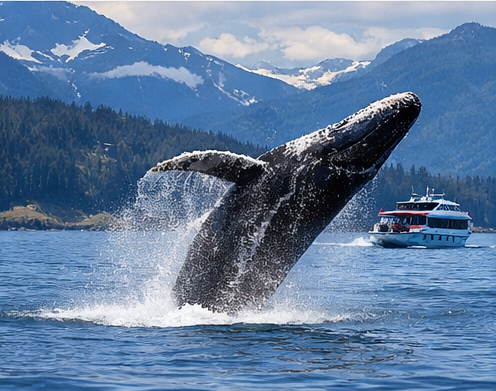
Juneau: Whale watching
Juneau is one of the most reliable whale-watching ports. Travel Juneau notes whale watching is best from April to November, with humpbacks commonly in the northern Inside Passage during that window.
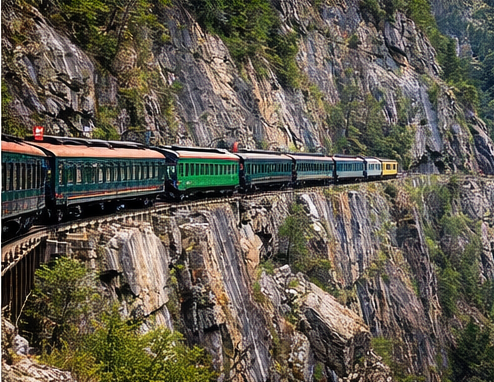
Skagway: White Pass & Yukon Route Railway
This one is famous for a reason. The White Pass site highlights their excursions and encourages booking early.
If you want big scenery without a strenuous physical day, this is a solid pick.
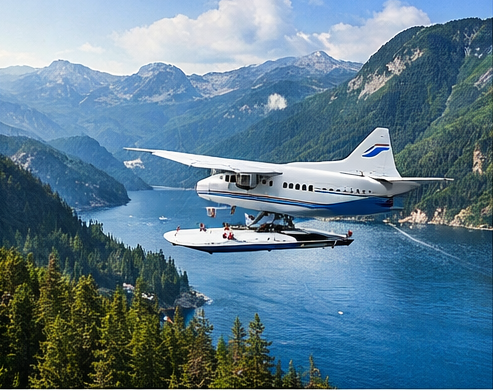
Ketchikan: Misty Fjords flightseeing
Misty Fjords Air promotes flightseeing into Misty Fjords National Monument as their most popular tour and highlights the scale of the wilderness you’ll see from the air.
This is the “I can’t believe that’s real” excursion for a lot of folks.
If you’re doing a cruisetour: Denali
If Denali is on your list, this is where cruisetour shines—rail connections and interior time give you a very different Alaska than the ports alone.
The simplest Alaska planning checklist
If you only remember five things, remember these:
-
Choose itinerary + glacier day first (Glacier Bay matters to many).
-
Pick the cruise line that matches your style (not just the ship).
-
Decide cruise-only vs cruisetour based on how “deep” you want Alaska to be.
-
Pack layers + waterproof outerwear.
-
Book 2–3 truly great excursions, not 10 “okay” ones.
Ready to plan Alaska the smart way?
If you want, I’ll help you compare itineraries (including Glacier Bay options), cruise lines, and whether a cruisetour makes sense for your trip style—then we’ll build it around the excursions that are actually worth your time.
Plan your trip with me at SignatureCruiseTravel.com

What “Luxury” Really Means (and How to Get It Right)
If you’ve ever looked at a “luxury” trip online and thought, “Okay… but what am I actually getting?” — you’re not alone.
“Luxury travel” is one of the most overused phrases in the business. And the funny thing is: real luxury usually doesn’t shout. It doesn’t need to. You feel it in the details—how smoothly things go, how well you’re taken care of, and how little time you waste dealing with the stuff that drains the joy out of a vacation.
So let me give you the plain-English version of luxury travel—what it really is, what it isn’t, and how to make sure you’re paying for the right things.

Luxury isn’t just the view—it’s having the details handled so you can actually enjoy moments like this.
What Luxury Travel Really Buys You (Hint: It’s Not Just Fancy Stuff)
Here’s the definition I use with my clients:
Luxury travel is less stress, more comfort, and better experiences—because someone thought through the details before you ever got there.
That can show up in different ways, but most true luxury comes down to five things:
1) Time
Luxury means you’re not burning half your trip in lines, confusion, or “where do we go now?” moments.
-
Private transfers instead of guessing taxi rules in a new country
-
Priority access when it’s worth it (museums, excursions, embarkation)
-
A smarter itinerary that doesn’t feel like a forced march
2) Space
This is one of the biggest differences between “nice” and “luxury.”
-
A cabin or suite where you can actually breathe
-
Smaller ships or thoughtfully designed resorts where you’re not fighting crowds
-
Lounges, quiet areas, and service that isn’t stretched thin
3) Personalization
Luxury isn’t about getting what everyone gets. It’s about getting what fits you.
-
Dining preferences that are remembered
-
The right pacing (relaxation vs. nonstop activity)
-
Excursions and experiences that match your interests—not just the brochure highlights
4) Access
Sometimes luxury is simply getting into the best experiences the easy way.
That might mean:
-
Smaller group tours
-
Hard-to-book dining or experiences
-
Special events or unique shore options (especially on premium cruise lines)
5) Service that feels effortless
Good service responds fast. Luxury service is proactive.
You shouldn’t have to “manage” your vacation.

In city travel, luxury often comes down to the right location, solid service, and a place that feels like a calm landing spot at the end of the day.
What Luxury Travel Is NOT (And Where People Get Burned)
Let’s save you some money and disappointment.
❌ It’s not automatically “luxury” because the price is high
Some expensive trips are just… expensive. That’s not the same as well-designed.
❌ It’s not about the most famous brand name
A well-matched boutique property can feel far more luxurious than a big-name hotel that doesn’t fit your style.
❌ It’s not stuffing your days full
Luxury is not coming home needing a vacation from your vacation.
One of the most “luxury” upgrades I can give clients is a better rhythm—enough structure to feel confident, enough breathing room to enjoy it.
The Two Biggest Luxury Travel Choices: Land Luxury vs. Cruise Luxury
Luxury travel usually lands in one of two lanes (sometimes both):
Lane A: Land-based luxury
This can look like:
-
A high-touch resort (service, food, quiet, comfort)
-
A private or small-group guided itinerary
-
Trains, drivers, and seamless connections
Best for: travelers who want deep immersion in one place—or who love iconic hotels and restaurants.
Lane B: Cruise-based luxury (ocean or river)
Cruise luxury is often the best “value” in luxury—because so much is bundled into one smooth experience. Your room travels with you, and the logistics are handled.
Premium and luxury cruise experiences often include:
-
Smaller ships
-
Higher staff-to-guest ratio
-
Elevated dining
-
More refined excursions and onboard atmosphere
Best for: travelers who want comfort + variety without constantly packing/unpacking.
(And yes—this is one reason my blog focuses so much on premium experiences and cruise education. It’s where a lot of people can upgrade their travel life without making it complicated.)

One of the underrated perks of a premium cruise: space, quiet, and sunsets you don’t have to fight a crowd to see.
A Quick “Luxury Reality Check” Before You Book Anything
Here are the questions I want you to ask before you put money down:
1) What do I want to feel on this trip?
Be honest:
-
Rested?
-
Celebrated?
-
Adventurous?
-
Taken care of?
Luxury starts with the outcome, not the label.
2) What’s my tolerance for crowds, waiting, and noise?
If crowds stress you out, you will not feel “luxury” in peak-season chaos unless your plan accounts for it.
3) Do I want my trip to be social or private?
Some travelers love a lively atmosphere. Others want quiet excellence. Both are valid—but they’re different trips.
4) What are my mobility and comfort needs? (Even small ones.)
This matters more than people realize.
Luxury isn’t just champagne and white tablecloths—it’s also:
-
minimal walking between key points
-
accessible rooms/cabins that are actually usable
-
transfers that don’t leave you scrambling
I plan for all kinds of travelers, including those who need mobility-friendly options—without making it the whole conversation. We just build it into the plan the way it should be.
My Simple Luxury Travel Formula: Spend on the “Friction Points”
If you want luxury that feels worth it, don’t just upgrade randomly. Upgrade where travel usually goes wrong.
Here are the biggest friction points (and where upgrades pay off):
-
Flights: better routing beats better seats, most of the time
-
Transfers: private or pre-arranged removes stress immediately
-
Hotel location: the right location can save hours (and your mood)
-
Excursions: fewer, better experiences beat “all day on a bus”
-
Itinerary pacing: build in real rest—not just “free time” on paper
This is exactly why working with a travel advisor matters for luxury: you’re not buying “stuff.” You’re buying a better-designed experience.
Final Thought: Luxury Should Feel Easy
If you take one thing from this post, take this:
Luxury travel should feel calmer—not more complicated.
When it’s done right, you’re not constantly solving problems. You’re enjoying the trip you imagined in the first place.
Ready to plan your next trip?
Plan your trip with me at SignatureCruiseTravel.com.
Ready to plan your next trip with confidence?
Reach out directly — I’m happy to help you get it right the first time.
